Flow Builder (IVR)
About
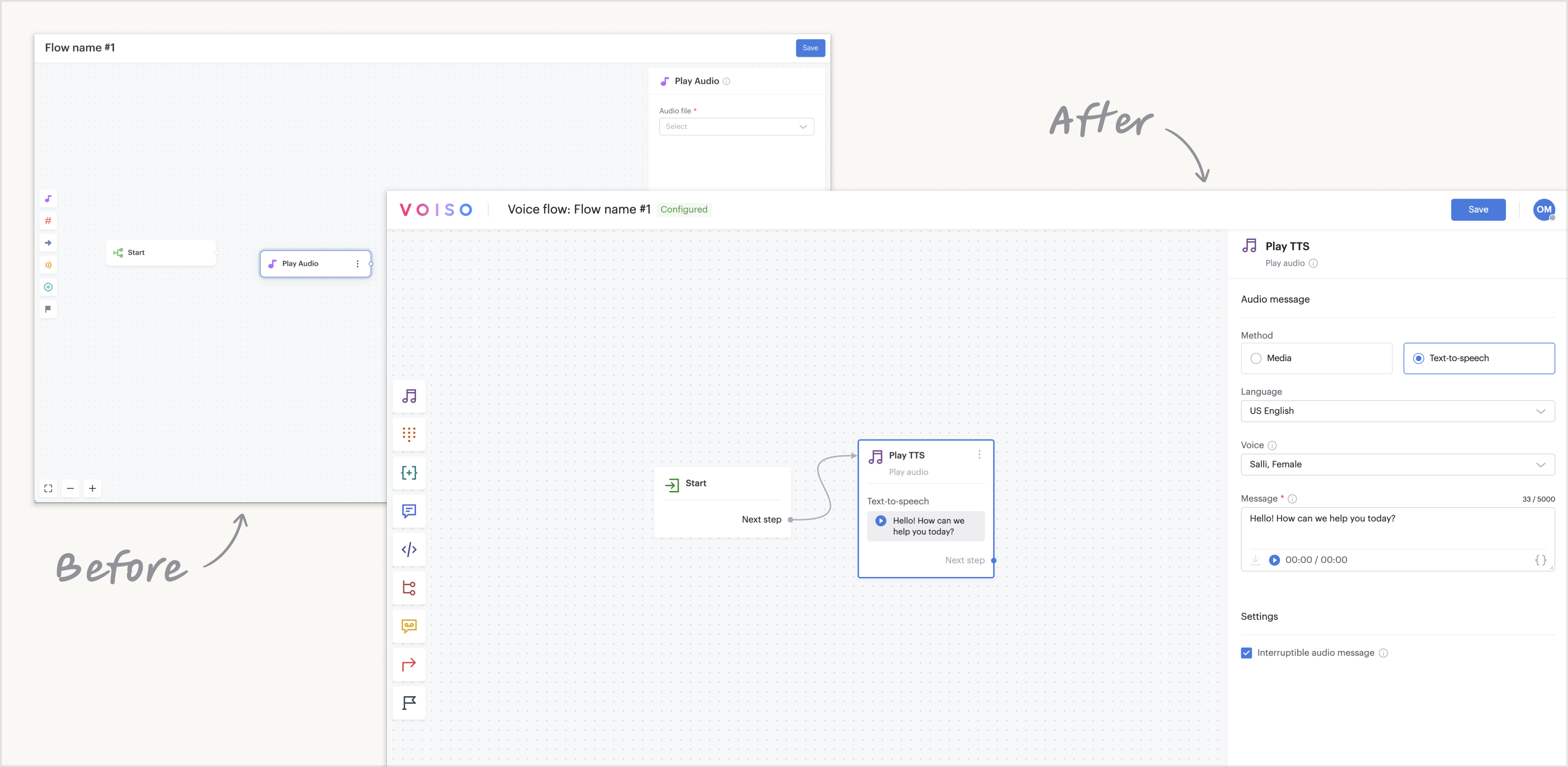
A visual, node-based builder (CCaaS IVR) for automating voice and digital customer journeys. Teams define how interactions route and what happens at each step, with no code required. When I joined in 2022, it existed as an early version with a small voice-only node set, basic logic, and not much a team could run without support.
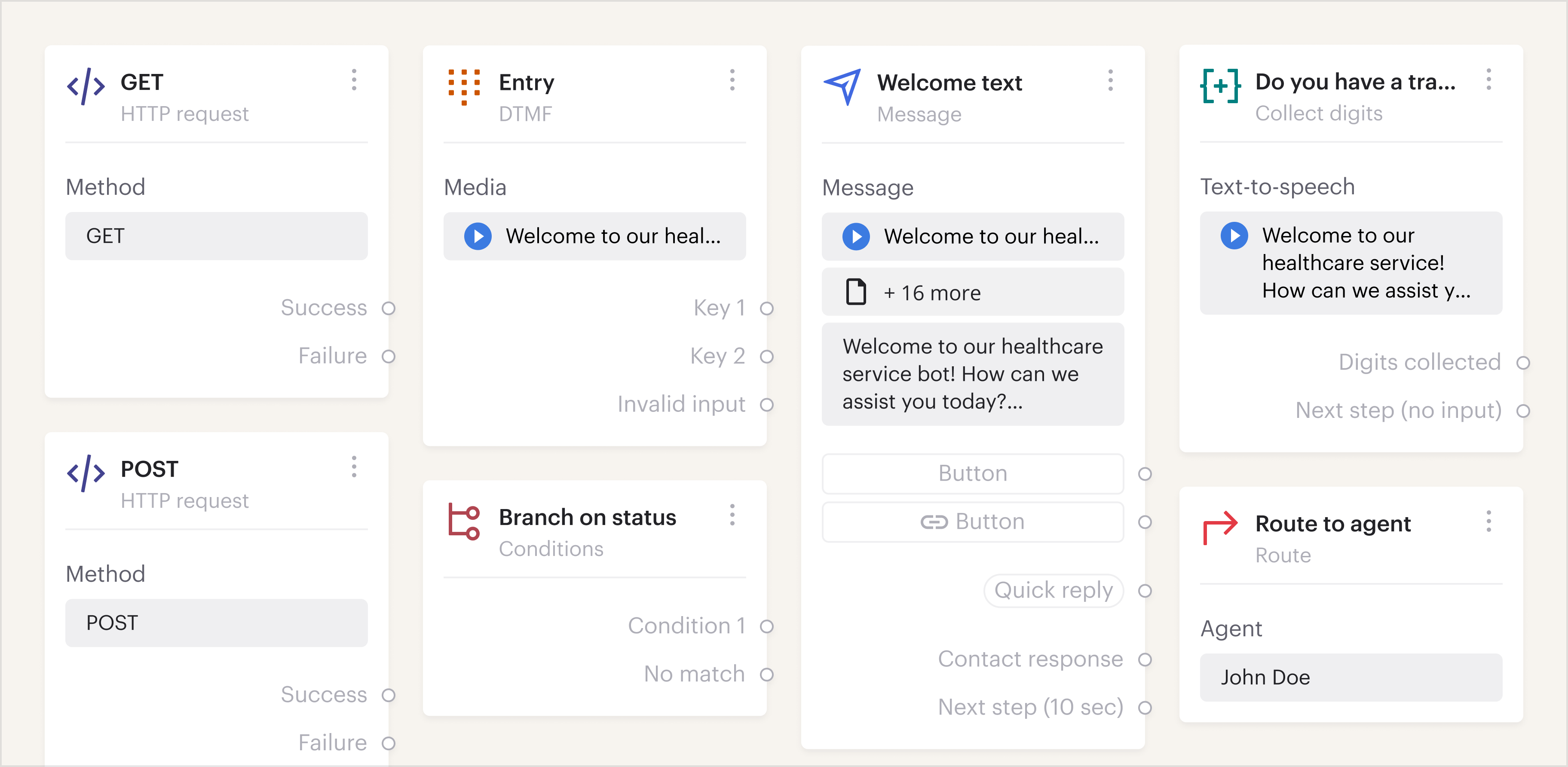
Current state: the node set grew from 5 to 11, covering both voice and digital flows. The video below shows an imaginary workflow that lets callers check their order status without an agent. After a greeting, the caller enters their order number, and the flow looks it up in an external system. If the order shipped, they get a text with tracking info; if it's still processing, they're routed to an agent; if nothing's found, they're connected to support. No input goes to voicemail: a simple flow that escalates only when needed.
Task
Node-based builders live or die on one tradeoff: powerful enough to model large, complex routing, simple enough that a non-technical admin never needs an engineer. The task was to build & scale a competitive tool that could scale into massive routing configurations made of distinct functional blocks, while staying easy to maintain, easy to support, and clear to extend as new functionality was added.
Solution
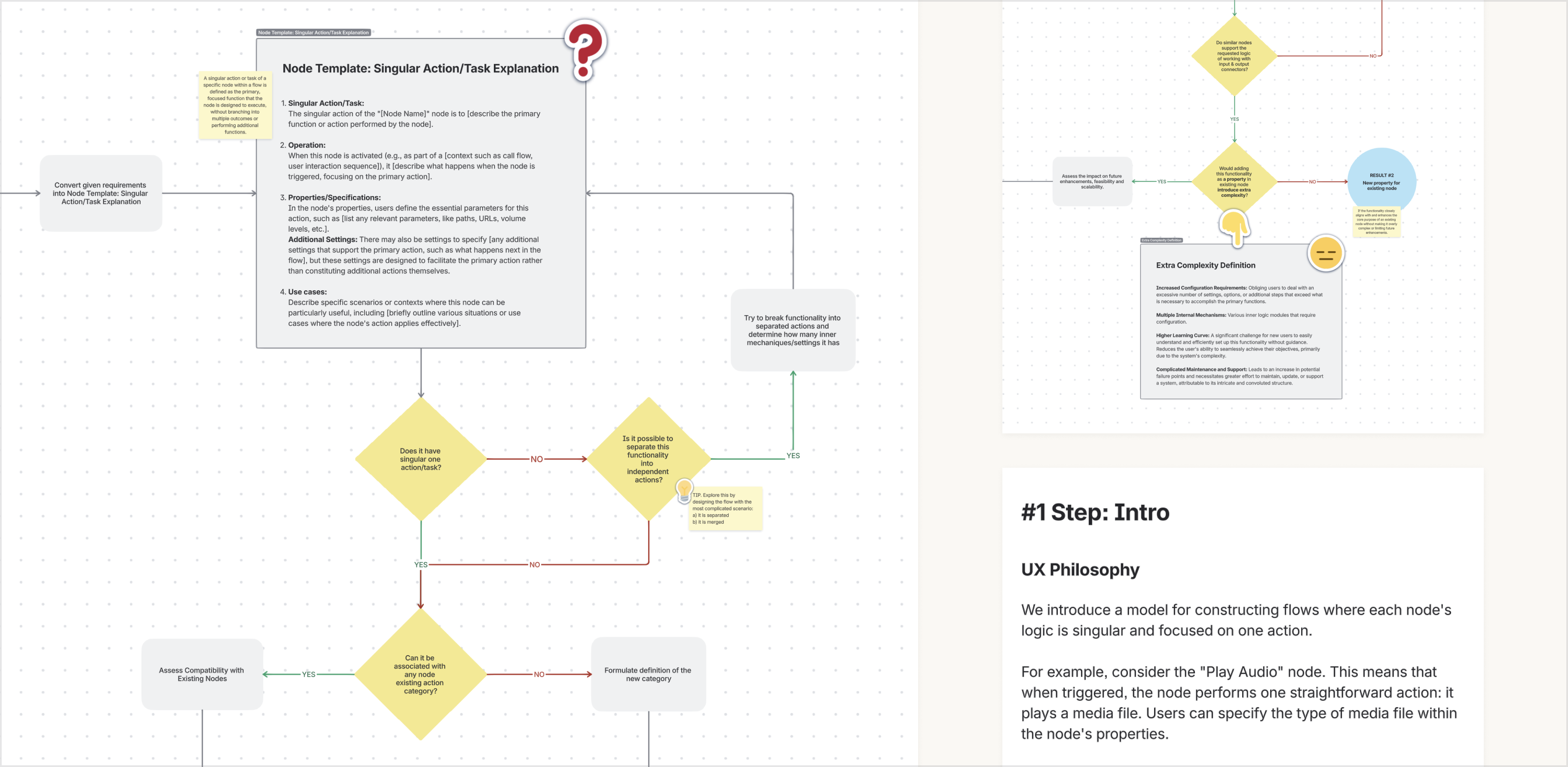
As design lead I set the direction and owned the standard the whole node set was held to, while the dedicated designer did the hands-on design, working from that standard. I directed him across the set and coached him through the harder structural problems rather than taking them off his plate. The decision that shaped everything was governing how the tool grew. As the palette expanded, I created a framework for whether each new capability earned its own node or belonged nested inside an existing one, and I made it a shared reference he used to make those calls himself rather than escalate each one. That scaled the team's judgment, not just the product: it kept the palette from sprawling and gave the tool a repeatable basis to grow without losing coherence.
Business Impact
- Enabled customers to build and maintain call automation flows without engineering involvement.
- Reduced operational dependency on support and implementation teams.
- Established a scalable foundation for future AI and automation capabilities across the platform.
- Increased product competitiveness in enterprise evaluations where workflow automation is a key requirement.
The full case study, including the design decisions and the whole process in detail, is something I'd be glad to walk through on a call.