Design System
About
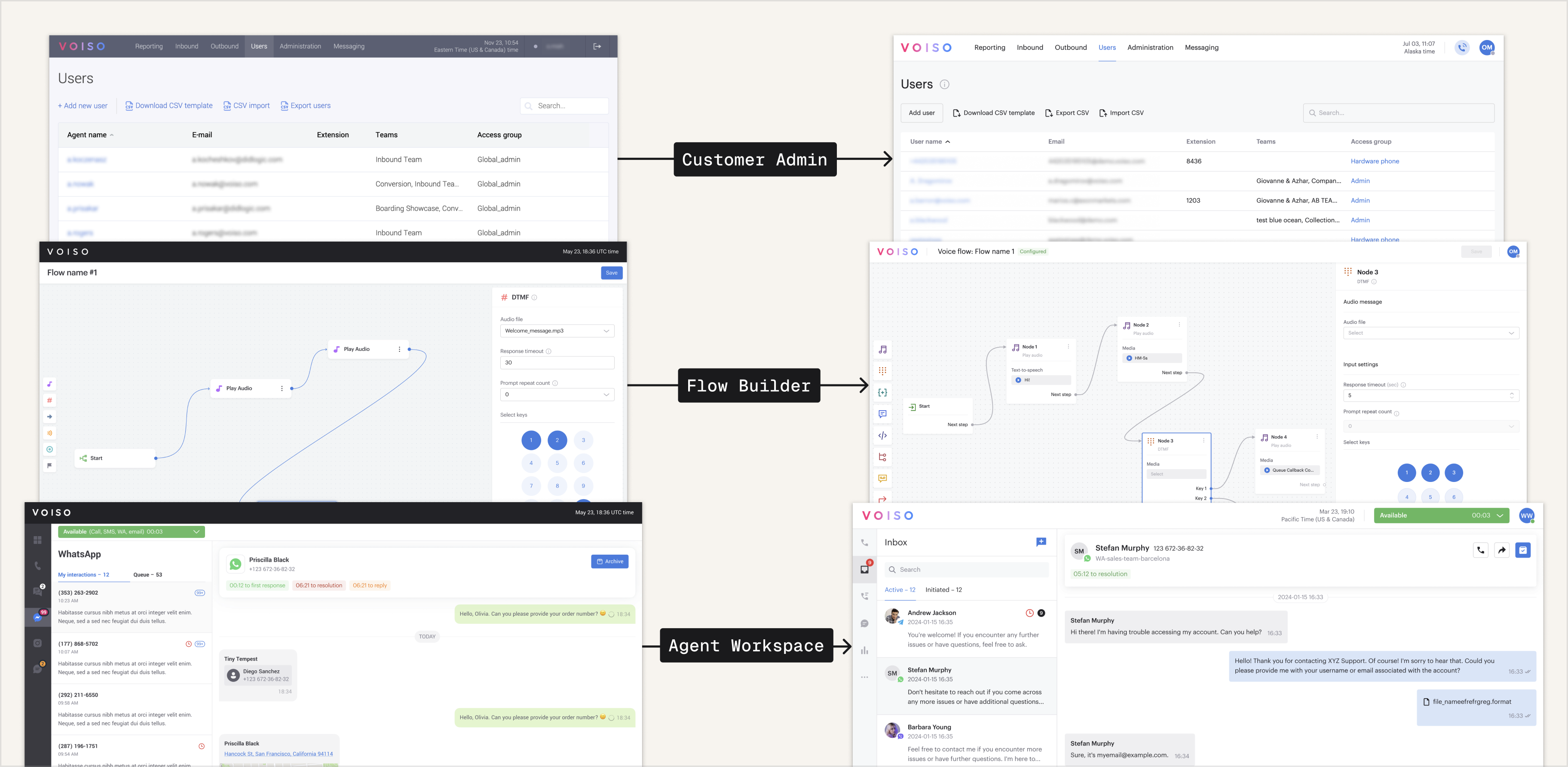
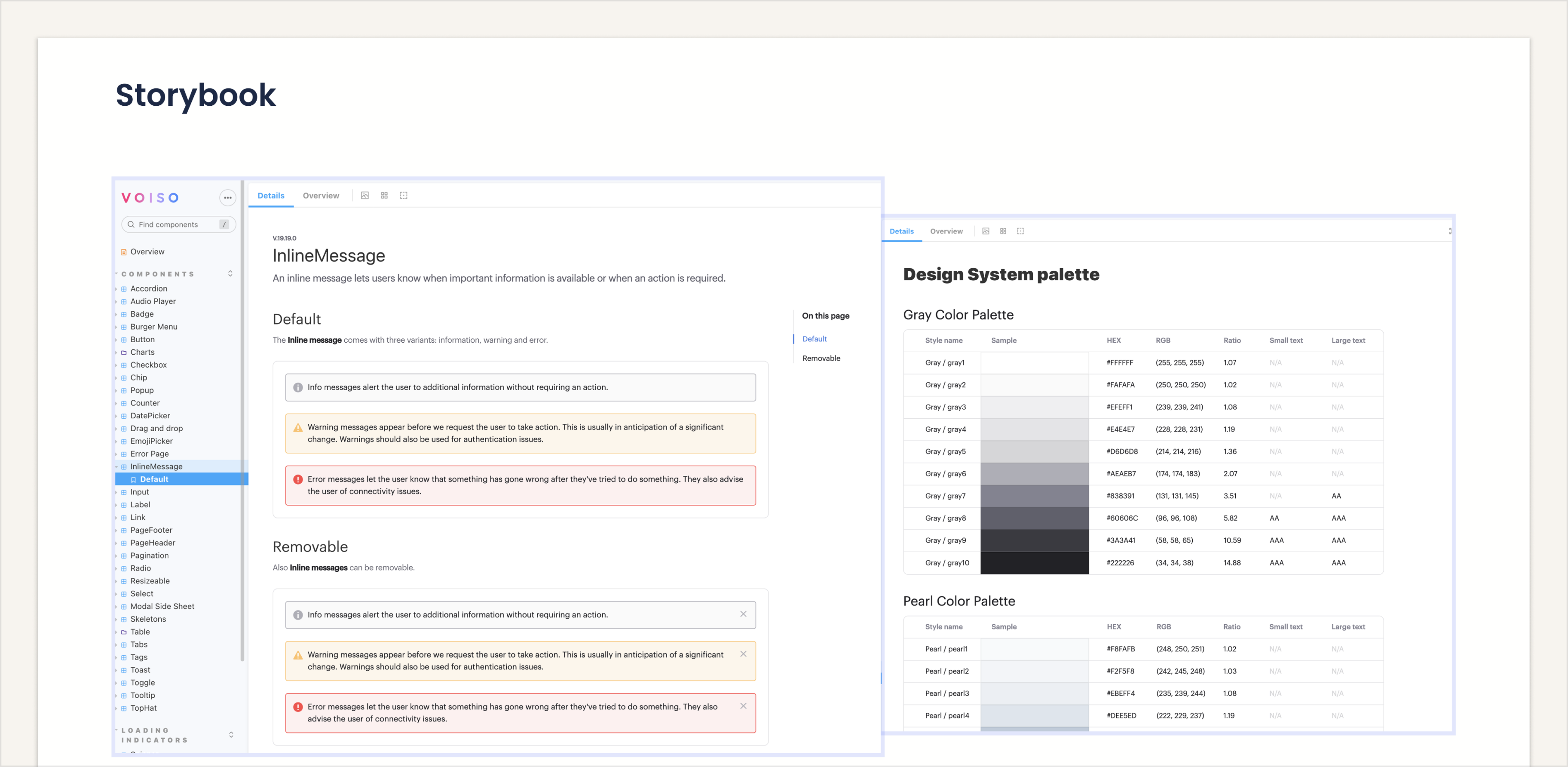
Voiso is a CCaaS platform: Customer Admin, Flow Builder (IVR), Agent Workspace, and the Softphone (dialpad). The admin surface alone spans dozens of entities, interconnected features & dependencies, 80+ pages. When I joined, a design system was partly in place: a Storybook with tokens, user data fields, buttons, and some states. None of it had been tested, and no one had tried to build a functional page from it. It was a set of popular controls moved from Figma to Storybook with no guidance on how to use them.
Task
It was never a task of building two Figma files: a design system of components, and the tokens they link to. That was the small half. The real work was moving the whole product suite onto it, on a live product that never stopped shipping. The other problem was hidden in broken cross-team collaboration: no shared operating model existed between stakeholders, design, product, and engineering.
Solution
I owned this initiative end to end, from zero to one: design direction, standards, and the PM side myself, writing the epics and requirements alongside the design foundation and operating model.
I started with an audit. I mapped the layouts across the product, took the most complex ones in their worst state, and tried to build them from the existing components. That showed what worked and what was missing, so the system was built against the hardest cases, not the easiest.
I authored the system's core patterns: the reusable interaction models the product inherits, how CRUD behaves, how validation surfaces, how the system gives feedback. Components inherit from them, so consistency holds by construction, not by policing. I designed the most complex entities hands-on and delegated the medium and small ones to my designers, who built them from my written patterns and guidelines, so my judgment scaled without my hand on every screen.
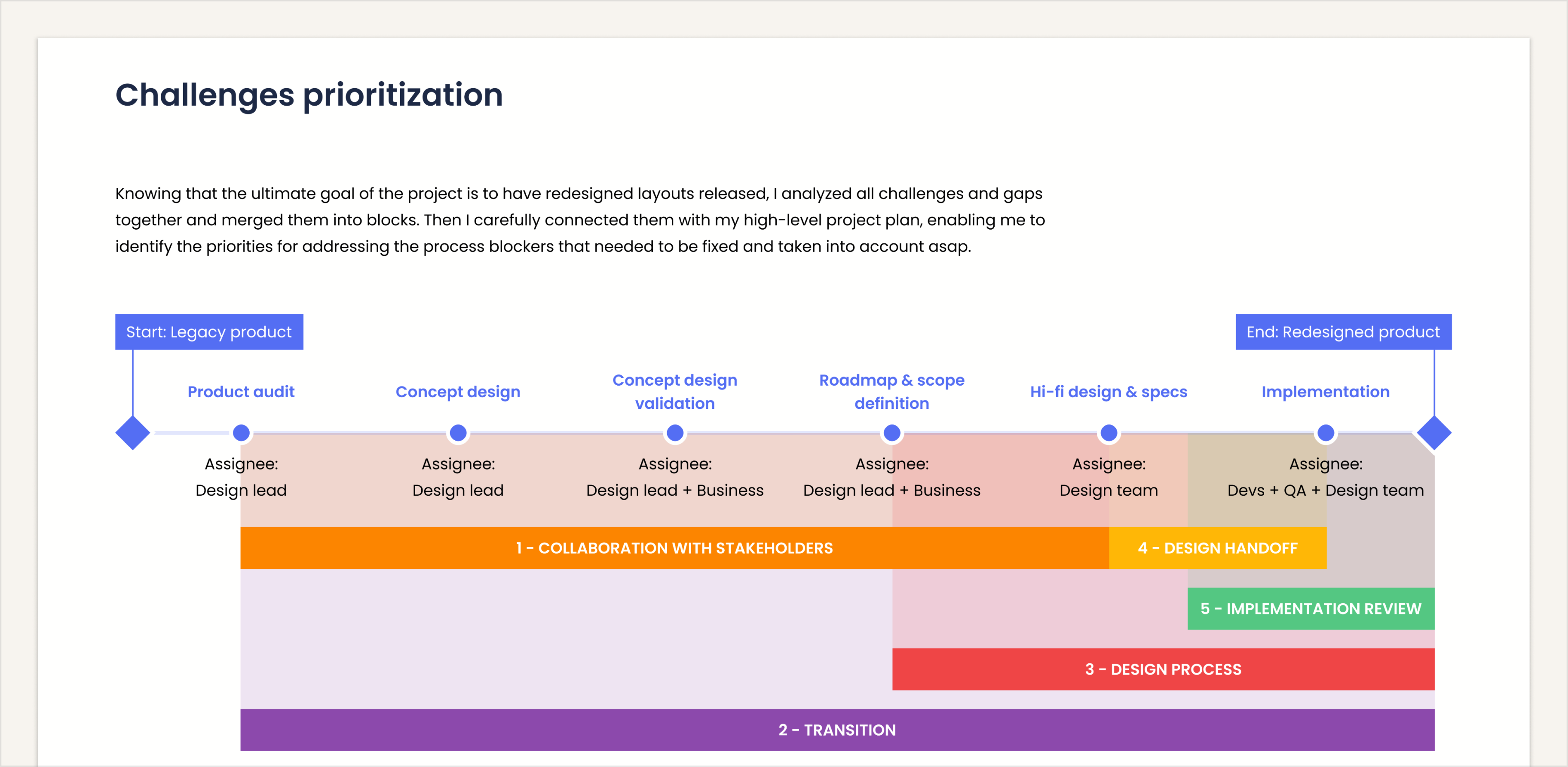
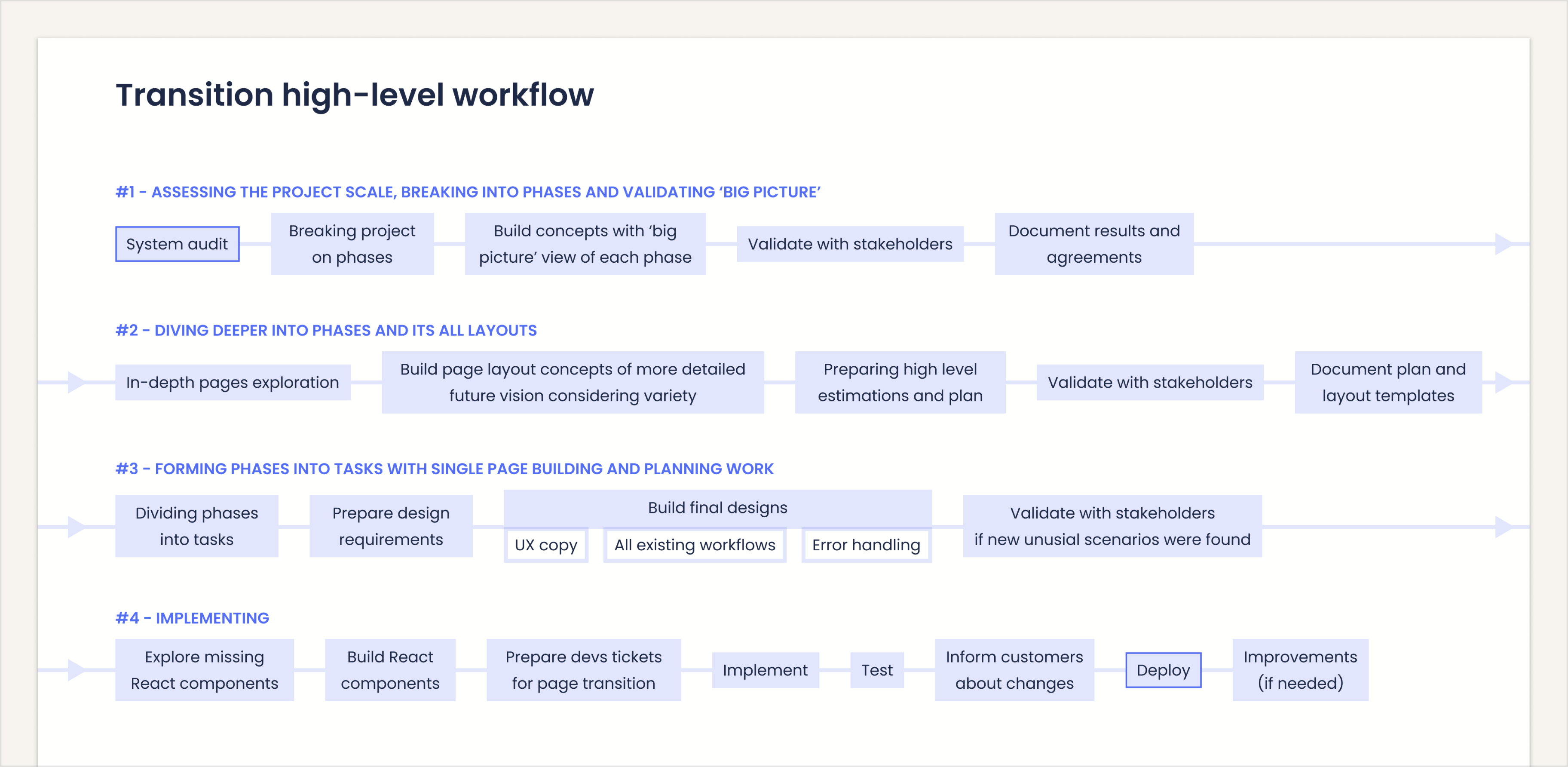
The operating model was five connected processes: stakeholder governance, transition (a phased audit-to-deploy workflow), design process, handoff built from developer interviews, and implementation review run in parallel with QA.
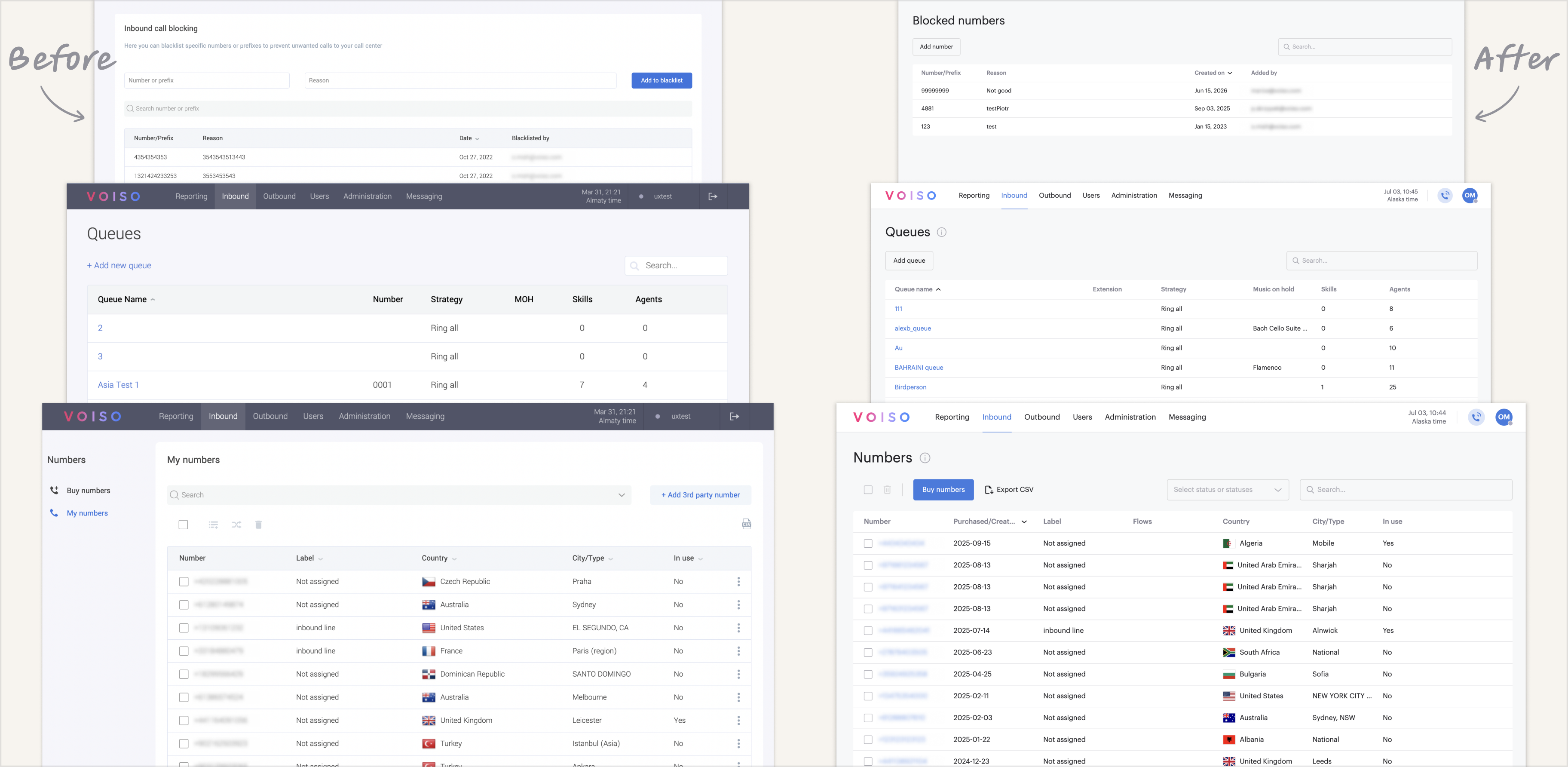
We ran the whole transition on a live product, alongside continuous feature development, with no disruption to users or workflows. So we preserved the business logic users depended on but rebuilt each entity from zero rather than reskinning it.
Business Impact
- Reduced design and development inconsistencies across products.
- Accelerated feature delivery through reusable patterns and shared components.
- Improved collaboration between Design and Engineering teams.
- Created a scalable foundation for future product growth.
The full case study, including the design decisions and the whole process in detail, is something I'd be glad to walk through on a call.